This week, the jobs you've been quoting as "out of range". 👋
Turns out the fix for the far corner of a property isn't a faster network; it's a much slower one. We get into the radio that quietly covers ground your cameras and cell signal can't reach, what it does brilliantly, and the one thing you should never promise a client it'll do.
Plus: a sticker that spots a fire before there's smoke, the boardroom TV renting out the network, and why your next recorder costs more.
Let's get into it.
MAIN FEATURE · THE BIG PICTURE
The radio that reaches where your cameras can't
Past the last fence line, there's no power and no signal. The fix isn't a faster network, it's a slower one…
Every quote you write assumes two things are present: Mains power and a network connection. On a suburban wall, fair enough, but the moment a client asks you to cover the borehole, the back reservoir, the far pump house or the top camp two kilometres from the homestead, both assumptions fall away.
There’s no Eskom out there, no fibre, patchy cell signal at best. That's exactly where the expensive breaches happen, and exactly where you need the best tech to reach.

Pictured: The best tech for this part of the farm…
The answer has been sitting in the industry for years, and it works by giving up the thing everyone else chases: speed.
Why slow radio wins out there
LoRa is a long-range, low-power radio built for sending tiny messages very far. One gateway covers 5 to 15km in rural areas and 2 to 5km in town, so a single box at the homestead can hear devices spread across the whole property. It runs in unlicensed spectrum, which means no SIM and no airtime bill per device, and the sensors themselves sip so little power they run for years on a battery, which is the only reason solar field units are practical at all.
Two things about it matter specifically to us. It talks both ways, so you can send a command out to a device, not just listen. And because it uses spread-spectrum modulation, it's more resistant to interference than the wireless most people know.
What it won't do
LoRa moves bytes, not megabytes, so it will never carry video.
It's for events, states and readings: Gate opened, tank low, panel tripped, temperature climbing, unit offline.
That trade-off is the whole point: You're not replacing the camera network, you're covering the ground the camera network was never going to reach.
Where you'll already find it
You may be selling it without knowing. Olarm HALO, the wireless in the Olarm ONE system, is built on LoRa, which is why it holds up better under interference than traditional alarm wireless and why it reaches across a property rather than across a room.
The signal
Stop treating the far corner of the map as somebody else's problem. The operator who says "yes, we can cover that too" wins the whole contract, not just the easy half. Sensors and states out there, cameras where the power is, and one gateway tying it together.
SHORTS · 5 SIGNALS FROM THE NOISE
FIRE
The sticker that watches for fires before there's smoke
Fidelity SecureFire and Sigfox SA have launched HEATWATCH, a heat-monitoring sticker you apply straight onto high-risk kit: solar inverters, battery banks, generators, DBs, server rooms. It measures temperature at the equipment itself rather than waiting for smoke, runs two years on its battery, needs no WiFi or hardwiring, and reports over the national Sigfox 0G network into a 24/7 command centre with fire response attached.
Signal: SA's solar and battery boom quietly added a fire risk to every property you cover. A no-wiring sensor on the inverter is an easy add-on conversation, and a differentiator on the quote.
CYBER
The TV in the boardroom was renting out the network
Researchers found Samsung smart TV apps, including a Pac-Man game Samsung itself featured under "Editor's Choice", carrying code that turns the TV into a tunnel for strangers' web traffic. Samsung is now banning the practice and pulling the apps; LG did the same last month after finding it in roughly 42% of its store.
Signal: Anything on a client's network with an app store is a device you don't fully control. Worth knowing what's sharing the line your alarm signals ride on.
ACCESS
Ask your biometric supplier one question
Deepfakes and generative AI have made fake identities cheap and convincing: cases where the selfie doesn't match the ID document are up 73% year-on-year, and synthetic identity fraud jumped 142% in a year. The practical defence is certification: iBeta testing to ISO/IEC 30107-3 puts a reader through days of masks, fake fingerprints and deepfakes to see if it can be spoofed.
Signal: "Is it iBeta certified?" is the one question that separates a serious biometric reader from a pretty one. Ask it before you spec it, not after.
FRAUD
Your company name is a scammer's best asset
The FSCA's latest enforcement report shows penalties of R2.8 billion imposed on 76 people and entities, up from R119.8 million the year before, with 140 public warnings issued. Roughly a fifth of those warnings involved criminals impersonating legitimate, licensed businesses to look credible.
Signal: 68% of South Africans say they've been targeted by fraud. If your brand carries trust in your area, assume someone will eventually borrow it, and tell clients how you actually contact them.
SUPPLY
Your next DVR just got more expensive
AI data centres have swallowed the world's memory supply, and it's now reaching ordinary hardware: MacBook Air delivery dates have slipped to late August or September, with DRAM prices up as much as 98% in Q1 2026 and another 58 to 63% expected after that. The industry is calling it RAMageddon. IDC expects the PC market to shrink 11.3% this year.
Signal: Recorders, control-room PCs and anything with a chip in it rides the same curve. Buy ahead of need while older stock is still on the shelf, and quote hardware with a shorter validity period than you used to.
BUSINESS · SELL BETTER
Quote the sites where you can't run cable
Half the awkward jobs come down to the same thing: the client wants a device somewhere a cable can't reasonably reach. The Olarm ONE system is built for exactly that spread. The Olarm HUB sits at the centre and takes a wired Ethernet connection when one is available, while Olarm HALO covers the points where pulling cable would mean trenching, chasing walls or an argument with the client.
Three reasons it's worth your team's hour:
Fewer "we can't do that" moments: Knowing what the wireless side can actually reach turns a site walk-through from a list of excuses into a quote.
Olarm HALO holds up better under interference: It's built to be far more resistant to jamming than traditional wireless, which matters on the exact perimeter points a chancer would target first.
Wired where it counts, wireless where it doesn't: Speccing the mix properly is the difference between a clean install and three return visits.
Get the whole system straight in your head before the next site visit.
A LIGHTER NOTE · MIND BENDER
SA physicists made light tough enough to survive a storm
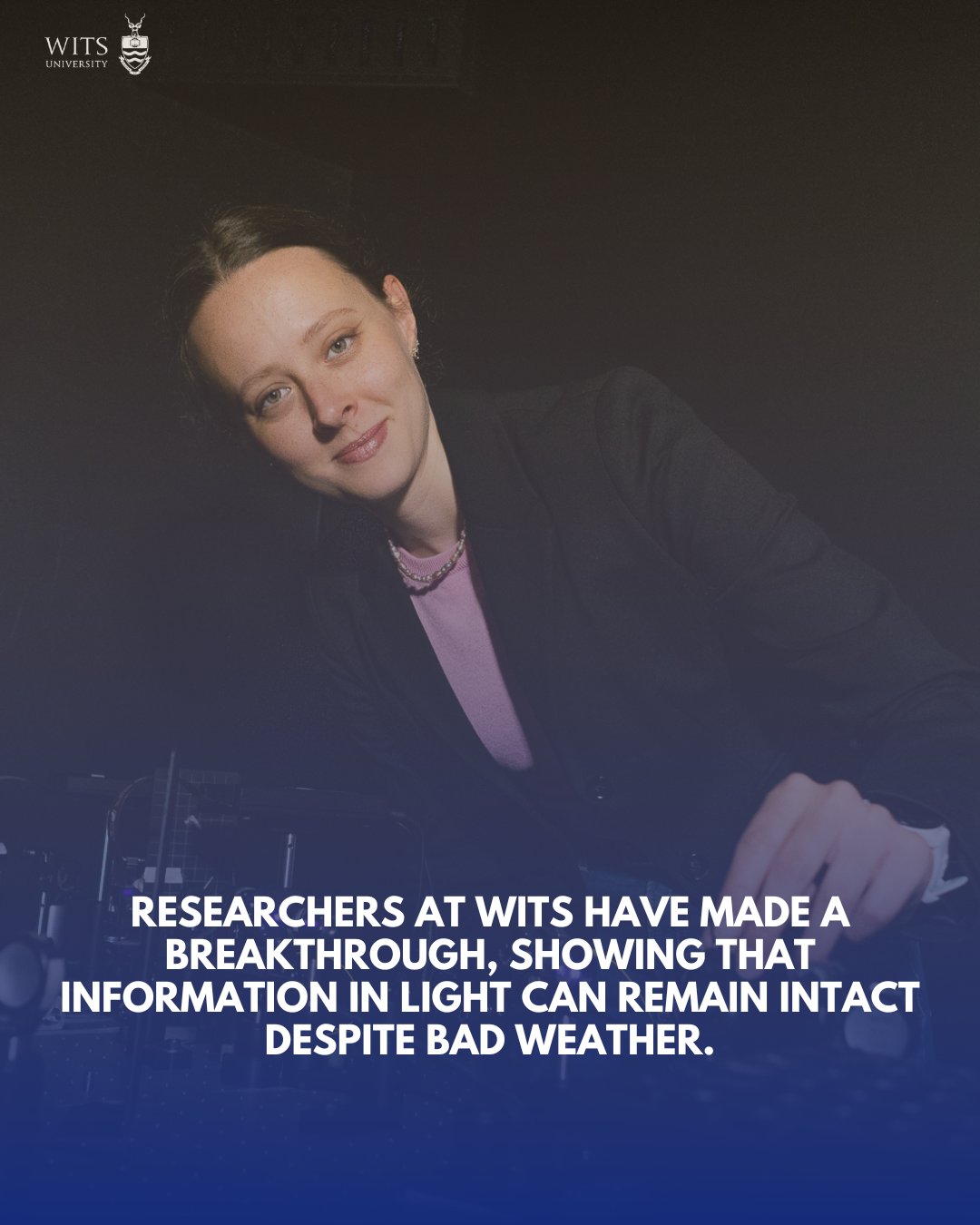
Wits researchers have shown quantum information carried on "twisted" light survives turbulent air completely intact, even when the light itself arrives mangled: the topological number held exact while the quantum state's purity dropped to 33%.
Published in Physical Review Letters, and the neat part is it needs no new hardware, just a different way of measuring. This breakthrough reopens a route to open-air unbreakable comms that's been stuck in the lab for two decades.
Signal: The eventual buyers of this are banks and critical-infrastructure operators watching today's encryption run out of road. Worth knowing SA's lab is at the front of that queue.
FOR THE WEEKEND
The offshore calendar keeps rolling
Plenty on the water this month if you're anywhere near the KZN coast:
Rod & Reel Interclub, Natal Rod & Reel: 7–9 August
Queens of the Ocean Gamefish Tournament, St Lucia: 7–8 August
SADSAA Bottomfish Interprovincial, Umhlanga: 20–23 August
Fishing or running something we should shout about? Hit reply and put it on our radar.
